
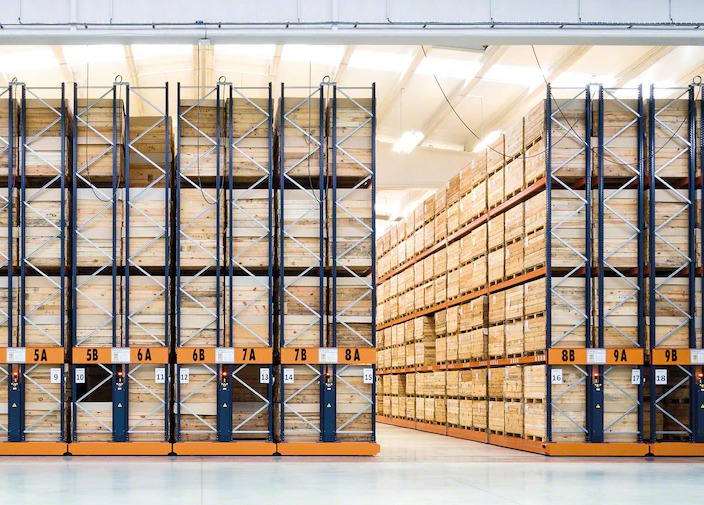
mobile-pallet-racking-system central ohio material handling products installation pallet racking sales midwest columbus ohio

Maximizing Efficiency and Space With Mobile Racking

In the dynamic landscape of warehousing and logistics, the innovation of mobile racking systems has revolutionized storage solutions, offering flexibility, efficiency, and space optimization. Mobile racking, also known as mobile shelving or high-density storage, refers to a system where shelving units or racks are mounted on carriages that move along tracks, allowing for dense storage and easy access to stored items. The benefits of mobile racking systems have made them invaluable across various industries.

What is Mobile Racking?

Mobile racking systems are designed to address the need for space optimization in storage facilities. By eliminating unnecessary aisles and utilizing the available space more effectively, these systems significantly increase storage capacity. The key feature of mobile racking is the ability to move entire rows of shelving sideways, opening up access to specific aisles only when needed. This compact and flexible design maximizes available storage space and enhances operational efficiency.

Benefits of Mobile Racking:

  1. Space Optimization: Mobile racking allows for a higher storage density by eliminating unnecessary aisles, maximizing space within a warehouse or storage area.
  2. Increased Storage Capacity: The system’s design increases storage capacity by utilizing available space more efficiently, accommodating more items in the same area.
  3. Improved Accessibility: With the ability to move aisles, mobile racking provides easy access to stored items, enhancing picking and retrieval efficiency.
  4. Customizable and Adaptable: These systems can be tailored to fit the specific needs of different industries, offering configurations that suit varying storage requirements.
  5. Enhanced Safety Measures: Mobile racking systems are equipped with safety features to prevent accidents and ensure a secure storage environment.
  6. Cost Efficiency: Utilizing space more effectively leads to reduced operational costs and a better return on investment.


Industries Benefiting from Mobile Racking:

  1. Retail and E-commerce: E-commerce companies and retail warehouses utilize mobile racking to efficiently manage and retrieve goods for fast-paced order fulfillment.
  2. Automotive and Manufacturing: Mobile racking streamlines storage for automotive parts and components, optimizing inventory management in manufacturing facilities.
  3. Pharmaceutical and Healthcare: These systems provide secure and organized storage for pharmaceuticals and medical supplies, ensuring easy access and inventory control.
  4. Cold Storage and Food Industry: Mobile racking is ideal for storing perishable goods in cold storage facilities, maximizing space and preserving product quality.
  5. Logistics and Distribution Centers: Mobile racking improves order picking efficiency, streamlining logistics operations for timely deliveries.

Mobile racking systems are continuously evolving to meet the specific needs of diverse industries, providing efficient, space-saving, and adaptable solutions for modern storage challenges. As technology and design continue to advance, these systems are expected to play an increasingly vital role in the optimization of storage spaces across multiple sectors.

Read more about the material handling industry

Innovative Material Handling Practices

Advancing Sustainability Through Innovative Material Handling Practices

In an era where environmental responsibility is paramount, industries across the board are embracing Sustainable Material Handling (SMH) to reduce their ecological footprint while enhancing operational efficiency. This holistic approach to material handling is not only environmentally conscious but also cost-effective, making it a powerful tool for organizations looking to meet sustainability goals. In this blog, we’ll explore Sustainable Material Handling, its key components, and the industries that are leading the way in adopting these eco-friendly practices.

Sustainable Material Handling: A Greener Approach

Sustainable Material Handling (SMH) is a multifaceted approach to material handling and logistics that focuses on environmental responsibility and resource efficiency. SMH not only reduces waste and energy consumption but also promotes resource optimization, ultimately contributing to a more sustainable future.

Key Components of Sustainable Material Handling


  1. Material Handling Equipment: Sustainable forklifts, electric conveyors, and energy-efficient pallet jacks reduce energy consumption and emissions during material transport.
  2. Energy-Efficient Warehousing: LED lighting, solar panels, and energy-efficient warehouse design minimize electricity consumption and environmental impact.
  3. Automated Systems: Automated storage and retrieval systems (AS/RS) and conveyor systems optimize material flow, reducing the need for manual labor and energy use.
  4. Green Packaging: Sustainable packaging materials and right-sized packaging choices reduce waste and environmental impact.
  5. Transportation Optimization: Route optimization software and alternative fuel usage reduce fuel consumption and emissions in transportation.
  6. Data Analytics: Real-time monitoring and data analysis identify areas for improvement, leading to resource optimization and waste reduction.
  7. Recycling and Waste Management: Recycling programs and waste-to-energy systems within facilities contribute to waste reduction and sustainability.
  8. Green Building Design: Incorporating energy-efficient features into facility design, such as efficient HVAC systems and natural lighting, reduces energy consumption.

Industries Leading the Charge in Sustainable Material Handling


  1. Logistics and Warehousing: The logistics industry actively adopts SMH practices to enhance efficiency and reduce environmental impact, especially through the use of automated systems and energy-efficient warehousing.
  2. Manufacturing: Sustainable Material Handling is integral to the manufacturing sector, as it helps streamline production processes, reduce waste, and minimize energy consumption.
  3. Retail: Retailers prioritize eco-friendly packaging, energy-efficient lighting, and sustainable transportation to align with customer demands for sustainable practices.
  4. Healthcare: Healthcare organizations embrace SMH to ensure the safe and efficient handling of medical supplies, reducing waste and resource consumption.
  5. Automotive: The automotive industry uses SMH to optimize supply chain operations, reduce waste in manufacturing, and enhance transportation efficiency.
  6. Food and Beverage: This industry focuses on sustainable packaging and energy-efficient material handling to improve its environmental footprint and reduce waste.

Incorporating Sustainable Material Handling practices not only benefits the environment but also makes economic sense. As industries across logistics, manufacturing, retail, healthcare, automotive, and food and beverage continue to lead the charge, the adoption of eco-friendly practices is poised to become the norm, contributing to a more sustainable and efficient future.

Read more about the material handling industry