
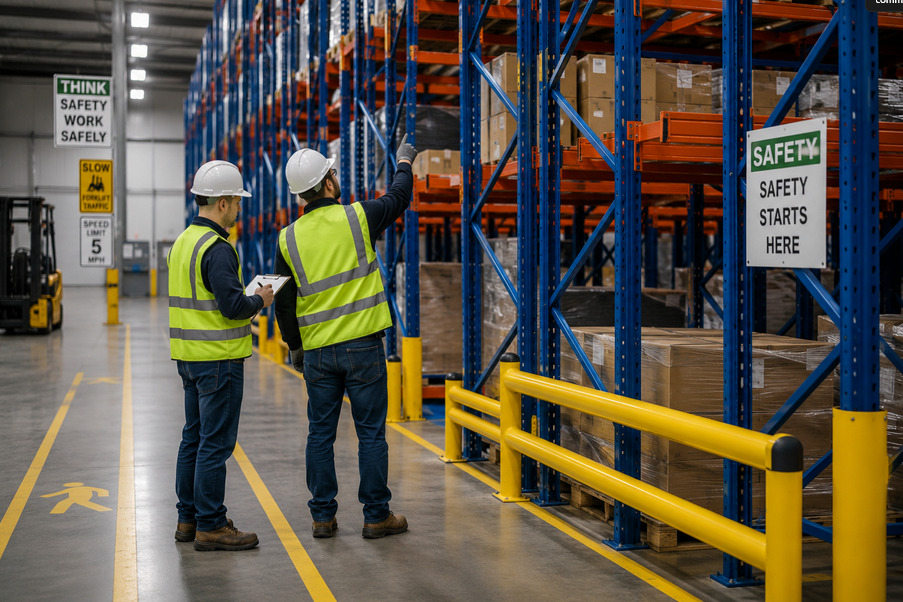
Warehouses are busy environments where forklifts, pallet racking, conveyors, loading docks, and employees operate in close proximity every day. Without proper safety procedures, even small oversights can lead to injuries, damaged inventory, equipment failures, and costly downtime.
Implementing a consistent warehouse safety checklist helps reduce risks, improve OSHA compliance efforts, and create a safer, more productive workplace. Whether you operate a distribution center, manufacturing facility, wholesale warehouse, or logistics operation, regular inspections are one of the most effective ways to maintain safe working conditions.
Why Warehouse Safety Inspections Matter
Warehouse operations face a variety of safety challenges, including:
- Forklift traffic
- Damaged pallet racking
- Blocked aisles
- Loading dock hazards
- Poor housekeeping
- Improper storage practices
- Inadequate safety barriers
- Employee safety concerns
Routine safety inspections help identify potential issues before they become serious problems.
OSHA Warehouse Safety Checklist FAQ
An OSHA warehouse safety checklist helps warehouse operators identify safety concerns involving pallet racking, forklifts, loading docks, conveyors, storage systems, emergency exits, housekeeping, and employee safety. Regular inspections help improve workplace safety, reduce risks, and support efficient warehouse operations.
What is an OSHA warehouse safety checklist?
An OSHA warehouse safety checklist is a structured inspection process used to evaluate warehouse safety conditions, identify hazards, and improve workplace safety practices.
How often should warehouse safety inspections be performed?
Most facilities perform daily visual inspections, weekly operational reviews, and periodic comprehensive safety audits depending on facility size and operational requirements.
Why are pallet rack inspections important?
Pallet rack inspections help identify damaged uprights, bent beams, missing safety components, and other issues that could compromise storage system safety.
What are common warehouse safety hazards?
Common hazards include forklift traffic, damaged racking, blocked exits, loading dock hazards, poor housekeeping, improper material storage, and inadequate safety barriers.
What should be inspected at a loading dock?
Dock levelers, vehicle restraints, dock seals, dock lights, trailer chocks, safety markings, and dock plates should be inspected regularly.
How do warehouse safety barriers improve safety?
Safety barriers help protect employees, equipment, storage systems, and facility infrastructure from accidental impacts and equipment damage.
What role does preventive maintenance play in warehouse safety?
Preventive maintenance helps identify issues before they lead to equipment failures, safety incidents, inventory damage, or costly downtime.
Can Buckeye Industrial help improve warehouse safety?
Yes. Buckeye Industrial provides pallet racking inspections, warehouse safety assessments, safety barrier installations, storage system solutions, and preventive maintenance programs.
OSHA Warehouse Safety Checklist
1. Inspect Pallet Racking Systems
Pallet racking is one of the most critical components of warehouse safety.
Inspect for:
- Bent uprights
- Damaged beams
- Missing safety clips
- Loose anchors
- Damaged wire decking
- Overloaded rack sections
- Rack impact damage
Even minor damage can compromise the structural integrity of a racking system.
2. Check Forklift Traffic Areas
Forklift operations are among the leading causes of warehouse accidents.
Verify:
- Clearly marked travel lanes
- Visible safety signage
- Functional warning lights
- Adequate aisle width
- Clear pedestrian crossings
- Unobstructed forklift routes
Safe traffic flow reduces collision risks and improves productivity.
3. Inspect Safety Barriers & Guard Rails
Safety barriers help protect employees, equipment, and storage systems.
Inspect:
- Guard rails
- Bollards
- Rack protection systems
- Column protectors
- Pedestrian barriers
- Equipment protection barriers
Replace damaged protection systems promptly.
4. Evaluate Loading Dock Safety
Loading docks are high-risk areas that require regular inspection.
Check:
- Dock levelers
- Dock seals
- Vehicle restraints
- Trailer chocks
- Dock lights
- Dock plates
- Safety markings
Proper dock safety procedures help prevent falls and equipment damage.
5. Verify Clear Emergency Exits
Emergency exits should always remain accessible.
Ensure:
- Exit routes are unobstructed
- Exit signs are visible
- Emergency lighting is functional
- Fire extinguishers are accessible
- Evacuation paths remain clear
Quick access during emergencies can save lives.
6. Maintain Good Housekeeping
Clean facilities are safer facilities.
Inspect for:
- Loose debris
- Damaged pallets
- Spilled liquids
- Excess packaging materials
- Trip hazards
- Obstructed walkways
Consistent housekeeping reduces accidents and improves operational efficiency.
7. Review Material Storage Practices
Improper storage can create serious hazards.
Verify:
- Loads are stable
- Pallets are in good condition
- Weight limits are observed
- Products are properly stacked
- Inventory is stored securely
- Heavy items remain on lower levels
Proper storage practices help prevent falling inventory and rack failures.
8. Inspect Conveyors & Material Handling Equipment
Conveyors should operate safely and efficiently.
Check for:
- Damaged rollers
- Missing guards
- Loose components
- Electrical issues
- Emergency stop functionality
- Product jams
Routine inspections help reduce downtime and safety risks.
9. Evaluate Employee Work Areas
Workstations should support safe and efficient operations.
Inspect:
- Packing stations
- Workbenches
- Tool storage
- Ergonomic conditions
- Lighting quality
- Equipment accessibility
Comfortable work areas help improve productivity and reduce injuries.
10. Verify Employee Safety Equipment
Personal protective equipment (PPE) remains an essential part of warehouse safety.
Confirm availability of:
- Safety glasses
- Hard hats
- High-visibility vests
- Gloves
- Hearing protection
- Fall protection equipment
Employees should be properly trained on PPE requirements.
Common Warehouse Safety Violations
Many OSHA warehouse violations involve:
- Damaged pallet racking
- Blocked exits
- Forklift safety concerns
- Poor housekeeping
- Inadequate fall protection
- Improper material storage
- Missing machine guards
Regular inspections help reduce these risks.
The Value of Preventive Maintenance
Preventive maintenance programs help warehouse operators identify problems before they result in equipment failures or safety incidents.
Routine inspections can help:
- Extend equipment life
- Improve workplace safety
- Reduce downtime
- Protect inventory
- Improve operational efficiency
- Lower repair costs
A proactive approach is often less expensive than emergency repairs.
How Buckeye Industrial Can Help
Buckeye Industrial helps warehouses, manufacturers, distribution centers, and logistics operations improve safety and operational efficiency through:
- Pallet Racking Inspections
- Warehouse Safety Assessments
- Safety Barrier Installation
- Rack Protection Systems
- Conveyor Support
- Storage System Solutions
- Preventive Maintenance Programs
- Facility Organization Services
Our team works with facilities throughout Ohio and beyond to help create safer, more productive operations.
Final Thoughts
Warehouse safety is not a one-time project. It requires ongoing inspections, maintenance, employee awareness, and facility improvements.
Using a consistent OSHA warehouse safety checklist can help reduce risks, improve organization, protect employees, and support long-term operational success.
Improve Warehouse Safety & Compliance
Whether you need pallet racking inspections, warehouse safety barriers, rack protection systems, facility evaluations, or preventive maintenance services, Buckeye Industrial can help.