
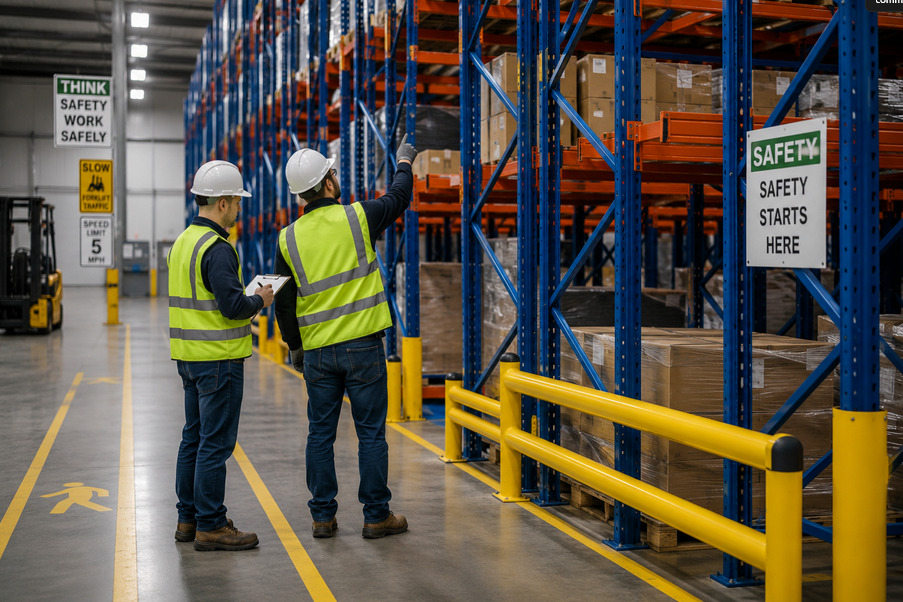
Warehouse workers inspecting pallet racking and warehouse safety systems as part of an OSHA warehouse safety checklist.

OSHA Warehouse Safety Checklist: Essential Steps for a Safer Warehouse

Warehouses are busy environments where forklifts, pallet racking, conveyors, loading docks, and employees operate in close proximity every day. Without proper safety procedures, even small oversights can lead to injuries, damaged inventory, equipment failures, and costly downtime.

Implementing a consistent warehouse safety checklist helps reduce risks, improve OSHA compliance efforts, and create a safer, more productive workplace. Whether you operate a distribution center, manufacturing facility, wholesale warehouse, or logistics operation, regular inspections are one of the most effective ways to maintain safe working conditions.

Why Warehouse Safety Inspections Matter

Warehouse operations face a variety of safety challenges, including:

  • Forklift traffic
  • Damaged pallet racking
  • Blocked aisles
  • Loading dock hazards
  • Poor housekeeping
  • Improper storage practices
  • Inadequate safety barriers
  • Employee safety concerns

Routine safety inspections help identify potential issues before they become serious problems.

OSHA Warehouse Safety Checklist FAQ

An OSHA warehouse safety checklist helps warehouse operators identify safety concerns involving pallet racking, forklifts, loading docks, conveyors, storage systems, emergency exits, housekeeping, and employee safety. Regular inspections help improve workplace safety, reduce risks, and support efficient warehouse operations.

What is an OSHA warehouse safety checklist?

An OSHA warehouse safety checklist is a structured inspection process used to evaluate warehouse safety conditions, identify hazards, and improve workplace safety practices.

How often should warehouse safety inspections be performed?

Most facilities perform daily visual inspections, weekly operational reviews, and periodic comprehensive safety audits depending on facility size and operational requirements.

Why are pallet rack inspections important?

Pallet rack inspections help identify damaged uprights, bent beams, missing safety components, and other issues that could compromise storage system safety.

What are common warehouse safety hazards?

Common hazards include forklift traffic, damaged racking, blocked exits, loading dock hazards, poor housekeeping, improper material storage, and inadequate safety barriers.

What should be inspected at a loading dock?

Dock levelers, vehicle restraints, dock seals, dock lights, trailer chocks, safety markings, and dock plates should be inspected regularly.

How do warehouse safety barriers improve safety?

Safety barriers help protect employees, equipment, storage systems, and facility infrastructure from accidental impacts and equipment damage.

What role does preventive maintenance play in warehouse safety?

Preventive maintenance helps identify issues before they lead to equipment failures, safety incidents, inventory damage, or costly downtime.

Can Buckeye Industrial help improve warehouse safety?

Yes. Buckeye Industrial provides pallet racking inspections, warehouse safety assessments, safety barrier installations, storage system solutions, and preventive maintenance programs.


OSHA Warehouse Safety Checklist

1. Inspect Pallet Racking Systems

Pallet racking is one of the most critical components of warehouse safety.

Inspect for:

  • Bent uprights
  • Damaged beams
  • Missing safety clips
  • Loose anchors
  • Damaged wire decking
  • Overloaded rack sections
  • Rack impact damage

Even minor damage can compromise the structural integrity of a racking system.


2. Check Forklift Traffic Areas

Forklift operations are among the leading causes of warehouse accidents.

Verify:

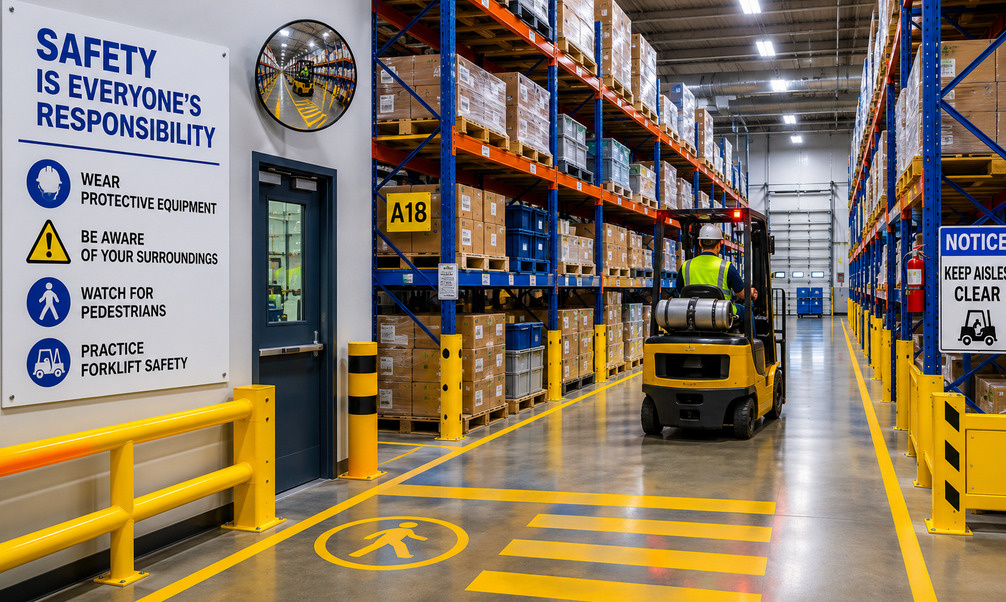
  • Clearly marked travel lanes
  • Visible safety signage
  • Functional warning lights
  • Adequate aisle width
  • Clear pedestrian crossings
  • Unobstructed forklift routes

Safe traffic flow reduces collision risks and improves productivity.


3. Inspect Safety Barriers & Guard Rails

Safety barriers help protect employees, equipment, and storage systems.

Inspect:

  • Guard rails
  • Bollards
  • Rack protection systems
  • Column protectors
  • Pedestrian barriers
  • Equipment protection barriers

Replace damaged protection systems promptly.


4. Evaluate Loading Dock Safety

Loading docks are high-risk areas that require regular inspection.

Check:

  • Dock levelers
  • Dock seals
  • Vehicle restraints
  • Trailer chocks
  • Dock lights
  • Dock plates
  • Safety markings

Proper dock safety procedures help prevent falls and equipment damage.


5. Verify Clear Emergency Exits

Emergency exits should always remain accessible.

Ensure:

  • Exit routes are unobstructed
  • Exit signs are visible
  • Emergency lighting is functional
  • Fire extinguishers are accessible
  • Evacuation paths remain clear

Quick access during emergencies can save lives.


6. Maintain Good Housekeeping

Clean facilities are safer facilities.

Inspect for:

  • Loose debris
  • Damaged pallets
  • Spilled liquids
  • Excess packaging materials
  • Trip hazards
  • Obstructed walkways

Consistent housekeeping reduces accidents and improves operational efficiency.


7. Review Material Storage Practices

Improper storage can create serious hazards.

Verify:

  • Loads are stable
  • Pallets are in good condition
  • Weight limits are observed
  • Products are properly stacked
  • Inventory is stored securely
  • Heavy items remain on lower levels

Proper storage practices help prevent falling inventory and rack failures.


8. Inspect Conveyors & Material Handling Equipment

Conveyors should operate safely and efficiently.

Check for:

  • Damaged rollers
  • Missing guards
  • Loose components
  • Electrical issues
  • Emergency stop functionality
  • Product jams

Routine inspections help reduce downtime and safety risks.


9. Evaluate Employee Work Areas

Workstations should support safe and efficient operations.

Inspect:

  • Packing stations
  • Workbenches
  • Tool storage
  • Ergonomic conditions
  • Lighting quality
  • Equipment accessibility

Comfortable work areas help improve productivity and reduce injuries.


10. Verify Employee Safety Equipment

Personal protective equipment (PPE) remains an essential part of warehouse safety.

Confirm availability of:

  • Safety glasses
  • Hard hats
  • High-visibility vests
  • Gloves
  • Hearing protection
  • Fall protection equipment

Employees should be properly trained on PPE requirements.


Common Warehouse Safety Violations

Many OSHA warehouse violations involve:

  • Damaged pallet racking
  • Blocked exits
  • Forklift safety concerns
  • Poor housekeeping
  • Inadequate fall protection
  • Improper material storage
  • Missing machine guards

Regular inspections help reduce these risks.


The Value of Preventive Maintenance

Preventive maintenance programs help warehouse operators identify problems before they result in equipment failures or safety incidents.

Routine inspections can help:

  • Extend equipment life
  • Improve workplace safety
  • Reduce downtime
  • Protect inventory
  • Improve operational efficiency
  • Lower repair costs

A proactive approach is often less expensive than emergency repairs.


How Buckeye Industrial Can Help

Buckeye Industrial helps warehouses, manufacturers, distribution centers, and logistics operations improve safety and operational efficiency through:

  • Pallet Racking Inspections
  • Warehouse Safety Assessments
  • Safety Barrier Installation
  • Rack Protection Systems
  • Conveyor Support
  • Storage System Solutions
  • Preventive Maintenance Programs
  • Facility Organization Services

Our team works with facilities throughout Ohio and beyond to help create safer, more productive operations.


Final Thoughts

Warehouse safety is not a one-time project. It requires ongoing inspections, maintenance, employee awareness, and facility improvements.

Using a consistent OSHA warehouse safety checklist can help reduce risks, improve organization, protect employees, and support long-term operational success.

Improve Warehouse Safety & Compliance

Whether you need pallet racking inspections, warehouse safety barriers, rack protection systems, facility evaluations, or preventive maintenance services, Buckeye Industrial can help.
Contact Buckeye Industrial today to discuss your warehouse safety and material handling requirements.

Preventative Maintanence Pallet Rack Safety Damage Inspections OSHA Compliance

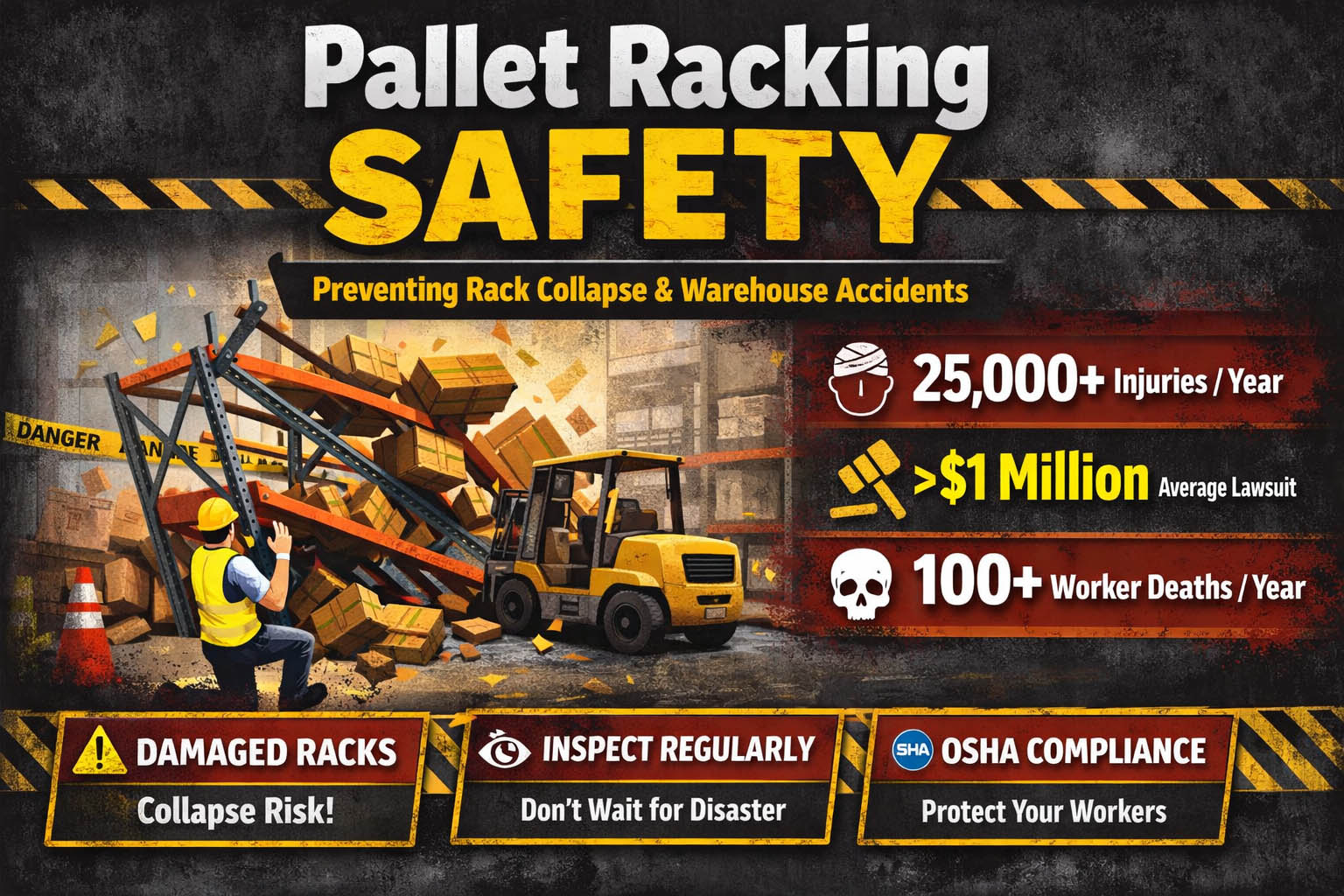
Pallet Racking Safety: The Hidden Dangers That Can Cost Lives, Millions, and Your Business

🏗️ Preventing Rack Collapse, Reducing Liability, and Keeping Your Warehouse OSHA-Compliant

In warehouses across Ohio and the U.S., pallet racking is often seen as “just storage.”

But the reality is very different.

Behind every rack system is massive weight, height, machinery, and risk—and when something goes wrong, it’s not a small issue… it’s catastrophic.

This guide breaks down:

  • real safety statistics
  • actual accident scenarios
  • legal and financial consequences
  • and exactly how to protect your facility

⚠️ The Reality: Warehouse Safety Is More Dangerous Than Most Think

Warehousing is one of the most injury-prone industries in the U.S.

  • Injury rates are significantly higher than the national average (Frommer D’Amico)
  • Over 253,000 injuries and illnesses were reported in one year alone (sstlift.com)
  • Fatal injury rates are higher than most industries (OSHA)

Even more concerning:

  • Warehouse fatalities increased 23% in one year (OSHA Online Center)
  • Forklifts alone cause ~100 deaths and tens of thousands of injuries annually (mccue.com)

👉 And many of these incidents are directly tied to pallet racking systems


💥 Pallet Rack Collapse: Rare… But Devastating

Rack failures don’t happen every day—but when they do, the consequences are severe.

A single failure can trigger a domino effect, taking out entire rows of racking and everything stored on them.

👉 Think about it:

  • thousands of pounds per pallet
  • stacked 20–40 feet high
  • collapsing in seconds

That’s not damage—that’s destruction.


☠️ Real OSHA Accident Examples (This Actually Happens)

These aren’t hypotheticals—these are real recorded incidents:

  • Worker killed after falling from pallet racking (OSHA)
  • Employee crushed by falling materials from racking systems (OSHA)
  • Fatal head injuries from rack and forklift collisions (OSHA)
  • Worker killed when entire storage rack collapsed (OSHA)

In another case:

  • A stacked pallet load became unstable and collapsed onto a worker, killing them (OSHA)

👉 These are not freak accidents
👉 They are preventable failures


⚠️ The Most Common Causes of Rack Failures

1. Forklift Impact (BIGGEST ONE)

  • Forklifts cause ~25% of warehouse accidents (OSHA Online Center)
  • Even a small hit can compromise structural integrity

👉 Damage often goes unnoticed… until failure


2. Overloading the Rack

  • Exceeding weight limits can cause catastrophic collapse
  • Many facilities don’t even know their rack ratings

3. Damaged Uprights or Beams

  • Bent uprights = weakened structure
  • A single damaged column can bring down an entire bay

4. Poor Installation or Modifications

  • Incorrect anchoring
  • Missing safety clips
  • Improper beam spacing

👉 These shortcuts lead to long-term risk


5. Bad Pallets & Load Instability

  • Broken pallets can:
    • slip
    • catch on racks
    • drop loads

This leads to falling object injuries, which account for tens of thousands of incidents yearly (The ANSI Blog)


⚖️ Lawsuits, Liability, and Financial Damage

Here’s what most businesses don’t think about until it’s too late:

If someone is injured or killed:

  • OSHA investigations
  • Major fines
  • Lawsuits (often millions)
  • Workers comp claims
  • Insurance increases
  • Possible criminal liability

👉 And that’s just the legal side


Operational impact:

  • Facility shutdowns
  • Lost inventory
  • Damaged equipment
  • Reputation loss

Rack collapse incidents alone are estimated to cost tens of billions annually (Fire Apparatus)


🔍 The Most Important Thing: INSPECTIONS

This is where most facilities fail.

📅 Recommended Inspection Frequency

🔹 Daily (In-House)

  • Visual checks by employees
  • Look for:
    • bent uprights
    • missing clips
    • damaged pallets

🔹 Weekly / Monthly

  • Supervisor walkthroughs
  • Documented safety checks

🔹 Annual (CRITICAL)

  • Professional rack inspection
  • Performed by trained specialists

👉 This is the #1 way to prevent catastrophic failure


🚨 Damage Classification (Know When to Act)

From industry best practices:

🟢 Minor Damage

  • Monitor
  • Schedule repair

🟠 Moderate Damage

  • Repair ASAP
  • Limit load

🔴 Critical Damage

  • UNLOAD IMMEDIATELY
  • Block off area
  • Replace before use

👉 Waiting is how accidents happen


🛠️ Repair vs Replace: What You Should Do

Repair When:

  • localized beam damage
  • minor upright dents
  • components can be reinforced

Replace When:

  • upright is compromised
  • multiple impacts
  • structural integrity is questionable

👉 Never “just leave it” — that’s how failures start


🧠 Safety Culture: The Real Difference Maker

The safest warehouses all have one thing in common:

👉 They treat racking as equipment—not shelving

That means:

  • routine inspections
  • trained operators
  • immediate damage reporting
  • strict load management

🏁 Final Thoughts: This Is Not Optional

Pallet racking safety isn’t:

  • a suggestion
  • a “later” fix
  • or a minor maintenance task

It’s:
👉 worker safety
👉 legal protection
👉 operational stability


💬 Bottom Line

If your facility has:

  • bent racks
  • unknown load capacities
  • no inspection schedule

👉 You are operating at risk.


📞 Need a Rack Inspection or Repair in Ohio?

Buckeye Industrial provides:

  • pallet racking inspections
  • damage repair & replacement
  • layout redesign & safety upgrades

Serving:

  • Columbus and surrounding Ohio areas

Don’t wait for an accident to take action.


View Preventative Maintenance Information

Warehouse Safety products and services central ohio

Warehouse Safety Products That Save Lives and Equipment: A Complete Guide by Buckeye Industrial

Why Safety Matters in Warehouse Environments

In every warehouse or industrial facility, safety isn’t optional — it’s the foundation of productivity, compliance, and profitability. Modern warehouses rely on heavy pallet racks, forklifts, conveyors, and loading docks that move thousands of pounds daily. One missed inspection, one forklift strike, or one unguarded ledge can lead to catastrophic injury, property loss, or OSHA violations.

At Buckeye Industrial, we supply and install the safety barriers and guarding systems that protect people, products, and equipment — because prevention costs less than repairs.


1. Guardrail / Handrail Systems

Guard Rail Safety Rails Warehouse Safety Precautions

Purpose: Physical protection for walkways, equipment zones, and pedestrian aisles.
What It Does: Industrial guardrails and handrails create a barrier between employees and moving forklifts or pallet jacks. Built from heavy-duty steel and anchored to the floor, they absorb and deflect impacts before they reach personnel or machinery.
Why You Need It: A single collision with a pedestrian walkway can lead to severe injury and legal consequences. Guardrails provide OSHA-compliant separation and peace of mind.
Example: Facilities often use bright yellow two-rail guard systems to mark walkways and protect critical assets like electrical panels, conveyors, and racking ends.

Benefits:

  • Prevents pedestrian accidents

  • Reduces forklift impact damage

  • Defines traffic zones

  • Enhances OSHA and insurance compliance


2. Rack Protection Systems

Guard Rail Safety Rails Warehouse Safety Precautions

Purpose: Prevent pallet rack uprights from bending or collapsing due to forklift impact.
What It Does: These protective steel barriers bolt directly in front of or around racking columns. When a forklift tire or pallet contacts the rack, the guard takes the hit — not the structure.
Why You Need It: Pallet rack collapses are among the most costly and dangerous warehouse incidents. A damaged upright can compromise the entire bay, leading to total rack failure.
Example: A $100 rack guard can prevent a $100,000 racking collapse.

Benefits:

  • Prevents costly racking replacement

  • Maintains structural integrity

  • Reduces injury risk

  • Extends rack lifespan


3. Dock and Door Safety Barriers

Dock Stop Super Heavy Duty Safety Precautions Warehouse

Purpose: Prevent falls, collisions, and loading dock accidents.
What It Does: Dock safety barriers and door guards stop forklifts or workers from accidentally rolling off dock edges. They can be removable, swinging, or hydraulic-style, depending on dock type.
Why You Need It: Loading docks are one of the top three sources of warehouse fatalities. Safety gates and barriers ensure OSHA compliance while protecting both workers and shipments.
Example: Bright yellow steel barriers installed at dock doors can stop a forklift from rolling into an open bay.

Benefits:

  • Prevents falls and roll-offs

  • Keeps loading areas secure

  • Enhances visibility and compliance

  • Protects against costly dock damage


4. Mezzanine Gates

Mezzanine Gates

Purpose: Safe access to elevated platforms and pallet drop zones.
What It Does: Mezzanine safety gates act as a protective barrier during material transfer. They allow pallets to be loaded or unloaded without exposing workers to open edges.
Why You Need It: Falls from mezzanines are a leading cause of warehouse injuries. A properly installed pivot or swing gate keeps workers safe at height while maintaining productivity.
Example: A dual-gate system ensures that one side is always closed — so no one is ever exposed to an open edge.

Benefits:

  • Prevents fall hazards

  • Meets OSHA and ANSI fall protection standards

  • Maintains workflow efficiency

  • Reduces insurance liability


5. Industrial Safety Gates

Industrial Safety Gates Warehouse Safety Precations

Purpose: Control access to ladders, platforms, and elevated work areas.
What It Does: These self-closing gates automatically shut behind workers, preventing accidental falls. They are essential for maintenance platforms, stair openings, and elevated conveyor crossings.
Why You Need It: Even one missed latch or open gate can result in a fall injury or OSHA citation.
Example: Buckeye Industrial installs powder-coated steel gates that self-close using spring tension, ensuring compliance even when employees forget.

Benefits:

  • Provides reliable fall protection

  • Easy to retrofit onto existing railings

  • Reduces human error and risk

  • Durable and maintenance-free


6. Industrial Bollards

Industrial Bollards Warehouse Safety Precaution Preventative Maintenance

Purpose: Provide heavy-duty impact protection for building corners, racks, and equipment.
What It Does: Bollards act like safety posts, absorbing impact from vehicles or forklifts before they can damage doors, support columns, or machinery.
Why You Need It: They protect your facility’s most vulnerable points — doorways, corners, and high-traffic intersections.
Example: A bollard at a dock door prevents accidental collision damage to roll-up doors or electrical panels.

Benefits:

  • Reduces costly repairs to structures

  • Prevents downtime due to facility damage

  • Guides vehicle traffic safely

  • Available in removable or permanent designs


7. Building Column Protectors

Purpose: Protect building support columns and structural beams.
What It Does: Molded from durable polyethylene or rubber, column protectors absorb impact and prevent structural damage if a forklift or pallet hits a column.
Why You Need It: Damaging a structural column can threaten building integrity — not just equipment.
Example: Snap-on column protectors fit around existing supports without tools and provide high-visibility cushioning.

Building Column Protectors Safety Precautions

Benefits:

  • Prevents costly structural repair

  • High-visibility safety color coding

  • Easy to install and replace

  • Ideal for warehouses with frequent forklift movement


8. Collision Awareness & Sensor Alert Systems

Collision Awareness Sensor Alert Warning Systems Warehouse Safety

Purpose: Provide visual and audible alerts to prevent collisions in high-traffic areas.
What It Does: These systems use motion sensors and flashing lights to warn drivers and pedestrians of approaching equipment at intersections, blind spots, and doorways.
Why You Need It: Even with physical barriers, awareness saves lives. Sensors reduce collision risk in areas where visibility is poor or traffic is constant.
Example: A motion-activated LED system alerts forklift drivers when another vehicle or pedestrian is approaching from the opposite side.

Benefits:

  • Prevents intersection accidents

  • Enhances driver and pedestrian awareness

  • Reduces collision-related downtime

  • Adds a layer of safety beyond physical barriers


The Bigger Picture: How Safety Products Save Money and Lives

Every one of these systems — from bollards to sensors — plays a role in reducing the most expensive problem in warehousing: unplanned downtime and accidents.

A $300 safety gate can prevent a six-figure injury claim. A $500 rack protector can stop a racking collapse that destroys $250,000 in product. And perhaps most importantly, these products protect what can’t be replaced — your people.

Investing in safety is not just about compliance; it’s about efficiency, morale, and reputation. OSHA penalties and lost time injuries are far more expensive than preventive measures.


Conclusion: Protect Your People, Product, and Property

Buckeye Industrial provides and installs all major warehouse safety systems including guardrails, bollards, rack protection, dock barriers, and collision alert systems throughout Central Ohio and surrounding regions.

If your facility uses pallet racking, forklifts, or mezzanines, now is the time to review your safety infrastructure. A proactive investment today can save thousands tomorrow — and keep every employee safe.

Contact Buckeye Industrial today to schedule a free safety assessment and learn how we can help your warehouse meet OSHA standards while improving workflow and uptime.