Preventative Maintanence Pallet Rack Safety Damage Inspections OSHA Compliance

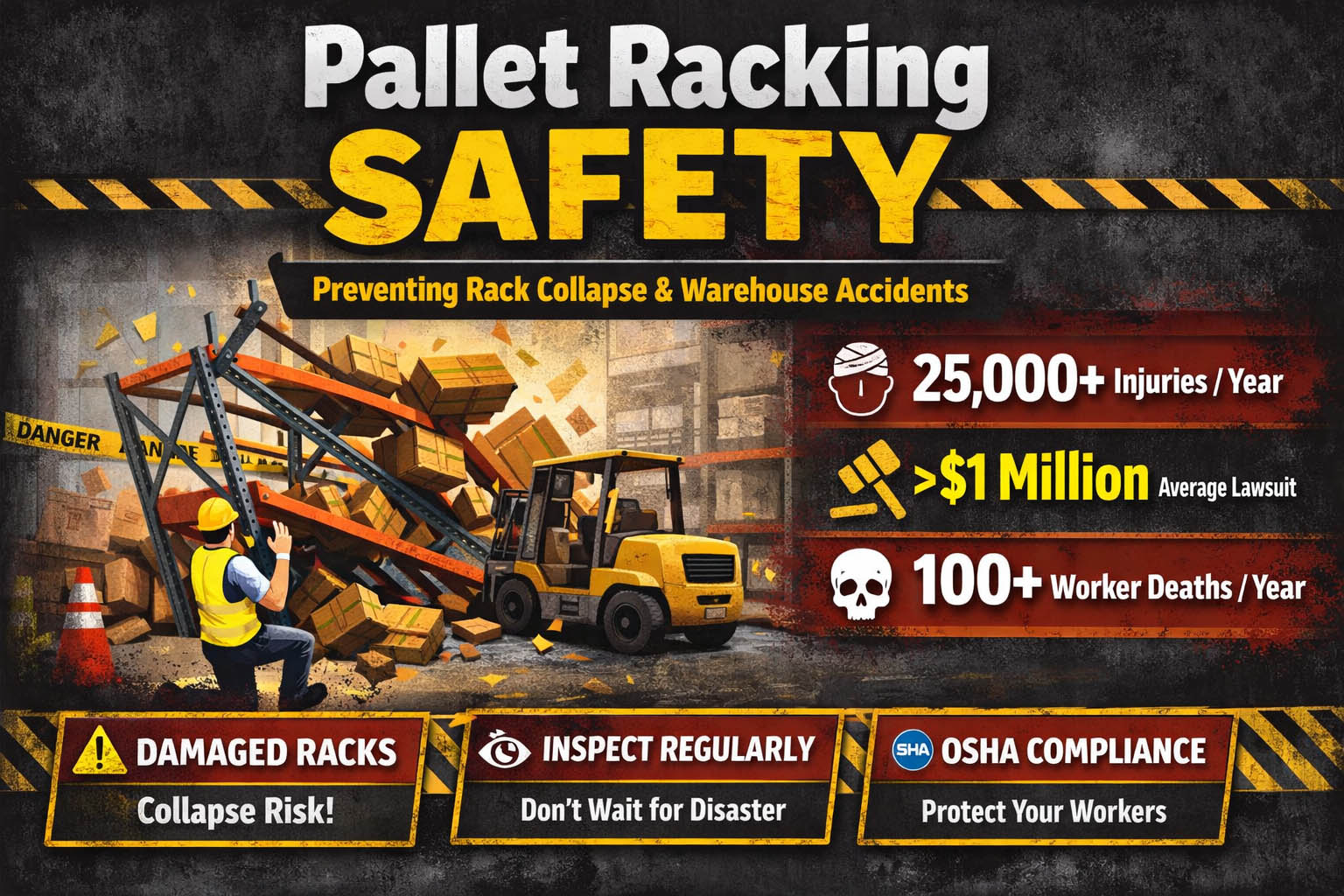
Pallet Racking Safety: The Hidden Dangers That Can Cost Lives, Millions, and Your Business

🏗️ Preventing Rack Collapse, Reducing Liability, and Keeping Your Warehouse OSHA-Compliant

In warehouses across Ohio and the U.S., pallet racking is often seen as “just storage.”

But the reality is very different.

Behind every rack system is massive weight, height, machinery, and risk—and when something goes wrong, it’s not a small issue… it’s catastrophic.

This guide breaks down:

  • real safety statistics
  • actual accident scenarios
  • legal and financial consequences
  • and exactly how to protect your facility

⚠️ The Reality: Warehouse Safety Is More Dangerous Than Most Think

Warehousing is one of the most injury-prone industries in the U.S.

  • Injury rates are significantly higher than the national average (Frommer D’Amico)
  • Over 253,000 injuries and illnesses were reported in one year alone (sstlift.com)
  • Fatal injury rates are higher than most industries (OSHA)

Even more concerning:

  • Warehouse fatalities increased 23% in one year (OSHA Online Center)
  • Forklifts alone cause ~100 deaths and tens of thousands of injuries annually (mccue.com)

👉 And many of these incidents are directly tied to pallet racking systems


💥 Pallet Rack Collapse: Rare… But Devastating

Rack failures don’t happen every day—but when they do, the consequences are severe.

A single failure can trigger a domino effect, taking out entire rows of racking and everything stored on them.

👉 Think about it:

  • thousands of pounds per pallet
  • stacked 20–40 feet high
  • collapsing in seconds

That’s not damage—that’s destruction.


☠️ Real OSHA Accident Examples (This Actually Happens)

These aren’t hypotheticals—these are real recorded incidents:

  • Worker killed after falling from pallet racking (OSHA)
  • Employee crushed by falling materials from racking systems (OSHA)
  • Fatal head injuries from rack and forklift collisions (OSHA)
  • Worker killed when entire storage rack collapsed (OSHA)

In another case:

  • A stacked pallet load became unstable and collapsed onto a worker, killing them (OSHA)

👉 These are not freak accidents
👉 They are preventable failures


⚠️ The Most Common Causes of Rack Failures

1. Forklift Impact (BIGGEST ONE)

  • Forklifts cause ~25% of warehouse accidents (OSHA Online Center)
  • Even a small hit can compromise structural integrity

👉 Damage often goes unnoticed… until failure


2. Overloading the Rack

  • Exceeding weight limits can cause catastrophic collapse
  • Many facilities don’t even know their rack ratings

3. Damaged Uprights or Beams

  • Bent uprights = weakened structure
  • A single damaged column can bring down an entire bay

4. Poor Installation or Modifications

  • Incorrect anchoring
  • Missing safety clips
  • Improper beam spacing

👉 These shortcuts lead to long-term risk


5. Bad Pallets & Load Instability

  • Broken pallets can:
    • slip
    • catch on racks
    • drop loads

This leads to falling object injuries, which account for tens of thousands of incidents yearly (The ANSI Blog)


⚖️ Lawsuits, Liability, and Financial Damage

Here’s what most businesses don’t think about until it’s too late:

If someone is injured or killed:

  • OSHA investigations
  • Major fines
  • Lawsuits (often millions)
  • Workers comp claims
  • Insurance increases
  • Possible criminal liability

👉 And that’s just the legal side


Operational impact:

  • Facility shutdowns
  • Lost inventory
  • Damaged equipment
  • Reputation loss

Rack collapse incidents alone are estimated to cost tens of billions annually (Fire Apparatus)


🔍 The Most Important Thing: INSPECTIONS

This is where most facilities fail.

📅 Recommended Inspection Frequency

🔹 Daily (In-House)

  • Visual checks by employees
  • Look for:
    • bent uprights
    • missing clips
    • damaged pallets

🔹 Weekly / Monthly

  • Supervisor walkthroughs
  • Documented safety checks

🔹 Annual (CRITICAL)

  • Professional rack inspection
  • Performed by trained specialists

👉 This is the #1 way to prevent catastrophic failure


🚨 Damage Classification (Know When to Act)

From industry best practices:

🟢 Minor Damage

  • Monitor
  • Schedule repair

🟠 Moderate Damage

  • Repair ASAP
  • Limit load

🔴 Critical Damage

  • UNLOAD IMMEDIATELY
  • Block off area
  • Replace before use

👉 Waiting is how accidents happen


🛠️ Repair vs Replace: What You Should Do

Repair When:

  • localized beam damage
  • minor upright dents
  • components can be reinforced

Replace When:

  • upright is compromised
  • multiple impacts
  • structural integrity is questionable

👉 Never “just leave it” — that’s how failures start


🧠 Safety Culture: The Real Difference Maker

The safest warehouses all have one thing in common:

👉 They treat racking as equipment—not shelving

That means:

  • routine inspections
  • trained operators
  • immediate damage reporting
  • strict load management

🏁 Final Thoughts: This Is Not Optional

Pallet racking safety isn’t:

  • a suggestion
  • a “later” fix
  • or a minor maintenance task

It’s:
👉 worker safety
👉 legal protection
👉 operational stability


💬 Bottom Line

If your facility has:

  • bent racks
  • unknown load capacities
  • no inspection schedule

👉 You are operating at risk.


📞 Need a Rack Inspection or Repair in Ohio?

Buckeye Industrial provides:

  • pallet racking inspections
  • damage repair & replacement
  • layout redesign & safety upgrades

Serving:

  • Columbus and surrounding Ohio areas

Don’t wait for an accident to take action.

 

View Preventative Maintenance Information

Pallet Rack Safety and Inspections Columbus Ohio Central Ohio Free Estimate

Preventive Maintenance for Warehouses: What It Is, How It Works, and Why Quarterly Service Contracts Pay Off

What is Preventive Maintenance (PM)?

Preventive maintenance is a planned, recurring program of inspections, adjustments, lubrication, parts replacement, and safety checks that keeps warehouse and material-handling equipment operating reliably. Instead of waiting for breakdowns, PM finds and fixes small issues before they become big failures that halt production, damage inventory, or create safety risks. In warehousing, PM typically covers pallet racking and shelving, conveyors and sortation, dock equipment and doors, forklifts and reach trucks, mezzanines, safety barriers/guarding, and controls.

Compliance note: OSHA’s warehousing guidance explicitly calls for inspecting and maintaining shelving and racking to prevent collapse, and it emphasizes proper storage and guarding practices—areas PM programs directly address. OSHA+1

How Preventive Maintenance Benefits a Company

  • Cuts unplanned downtime. Industry analyses show unplanned downtime is extremely expensive—ranging from tens of thousands to millions per hour depending on operation scale—making planned maintenance one of the highest-ROI investments available. WorkTrek+2flowfuse.com+2

  • Improves safety and reduces liability. Regular inspections of racks, conveyors, LOTO procedures, and powered industrial trucks reduce injury risk and regulatory exposure. OSHA requires pre-operation forklift inspections and proper guarding/maintenance practices. OSHA+1

  • Extends asset life. Proper lubrication, alignment, tensioning, and timely wear-part replacement add years to equipment life and stabilize capex plans. (Independent studies have reported triple-digit PM ROI.) MicroMain

  • Stabilizes throughput and on-time shipping. Fewer surprise stoppages mean steadier pick/pack SLAs and happier customers.

  • Supports OSHA, insurer, and auditor expectations. Documented PM with corrective actions shows due diligence if an incident occurs. OSHA

What Happens When You Don’t Maintain

  • Rack strikes + hidden damage → collapse risk. OSHA and racking best-practice resources stress routine inspection, impact protection, and prompt repair of damaged uprights/beams. OSHA+1

  • Conveyor incidents. Recent safety bulletins and case write-ups link severe conveyor injuries to lack of guarding, unsafe work practices, or maintenance performed without proper lockout. PM formalizes guarding checks and LOTO verification. WSPS+1

  • Forklift defects. Skipping pre-shift checks and scheduled service raises the odds of leaks, brake failures, chain issues, or tire blowouts. PM and operator inspections work together to catch these early. OSHA

  • What workers say (forums). Maintenance techs in public threads frequently report that chronic under-staffing or deferred PM leads to constant firefighting, more breakdowns, and costlier reactive repairs—confirming the “pay now or pay more later” reality. Reddit+2Reddit+2

How a Quarterly PM Program Works (Buckeye Industrial Model)

1) Baseline survey & risk ranking
We map your process flow, equipment list, age/condition, failure history, and safety hot spots. We rank risks (throughput impact, safety severity, repair cost) and set quarterly task lists.

2) Quarterly service visits (Q1–Q4 cadence)

  • Racking & storage: visual & gauge checks for bent/dented uprights, beam deflection, anchor integrity, load signage, pallet condition; tighten hardware; document damage with photos and tag out unsafe bays.

  • Conveyors & sortation: belt tracking/tension, idlers/rollers, bearings, guards/interlocks, drive chains, gearboxes, motor temps, sensors, e-stops; vibration & noise notes for trending.

  • Dock equipment & doors: hydraulic/air systems, lip & hold-down, door tracks/springs/seals, safety legs/guarding, bumpers.

  • Forklifts & PIT (with your lift vendor or on-site checks): operator pre-op checklist coaching, scheduling 250/500-hr services, tires/brakes/fluids/hoses/chain inspections. OSHA

  • Safeguarding & signage: guardrails, rack protectors, machine guarding, LOTO points, eyewash/extinguishers, posted load charts.

  • Lubrication & wear parts: align with OEM intervals; stage critical spares.

  • Safety & compliance review: findings, corrective actions, and OSHA-aligned documentation. OSHA

3) Reporting & KPIs
You get a digital report each quarter: deficiencies, photos, severity, recommended fixes, quotes, and an updated risk score. KPIs include MTBF, corrective work orders closed, repeat-fault rate, and downtime avoided (hours and estimated cost).

4) Continuous improvement
We trend issues across quarters and propose upgrades (e.g., rack protection, sensor retrofits, belt materials, dock seals) that reduce incidents and energy use.

How Preventive Maintenance Saves Money

  • Avoided downtime: Even modest facilities can lose thousands per hour in labor idle time, missed carrier cutoffs, and chargebacks—PM reduces these events. WorkTrek+1

  • Lower repair costs: Planned part swaps beat emergency service rates and overnight freight for critical components.

  • Extended asset life: Delays large capex by keeping conveyors, racking, and docks in spec. MicroMain

  • Reduced injuries & claims: Guarding checks, LOTO verification, and rack inspections lower incident frequency and severity (and insurer scrutiny). WSPS+1

Who Benefits Most (Industries & Use-Cases)

  • E-commerce & 3PL distribution centers (high conveyor/rack utilization, tight SLAs)

  • Automotive & industrial manufacturing (line-feed sequencing, just-in-time flows)

  • Food & beverage (temperature-controlled docks/doors, sanitation-driven PM)

  • CPG & retail DCs (seasonal volume spikes, mixed storage media)

  • Pharma/healthcare logistics (compliance documentation, chain of custody)

  • Cold storage (door seals, condensation control, corrosion mitigation)

  • Heavy parts & metals (high point loads on racking, forklift impacts)

Why Choose a Quarterly Service Contract with Buckeye Industrial

  • Predictable cost, predictable uptime. Lock in a quarterly cadence, spread your spend, and slash nasty surprises.

  • Local, fast, and specialized. Our teams focus on material-handling environments across Ohio and the Midwest.

  • Compliance-ready documentation. Each visit produces OSHA-aligned reports, photos, and a prioritized action plan. OSHA

  • Scalable scope. Start with racks/conveyors and add docks, guarding, or lifts as you grow.

  • Executive-friendly ROI story. We translate avoided downtime, reduced incidents, and extended asset life into dollars for your CFO—supported by industry data. WorkTrek+1


FAQ (Quick Hits)

How often should racks be inspected?
At minimum annually by a qualified professional, with more frequent in-house checks—monthly or quarterly—where traffic is heavy or damage risk is higher.

Are forklift inspections really required daily?
OSHA requires pre-operation inspections at the start of each shift. A PM program reinforces and documents this. OSHA

Do conveyors need guarding and LOTO checks during PM?
Yes. Several severe injuries have been linked to missing guards or maintenance without proper lockout—two things a solid PM and safety audit will flag.

Preventive Maintenance Services in Central Ohio by Buckeye Industrial

Buckeye Industrial proudly provides comprehensive Preventive Maintenance (PM) services across Central Ohio and surrounding counties, helping businesses in Columbus, Springfield, Dayton, Delaware, Marysville, and beyond keep their warehouse operations running safely and efficiently. Our certified technicians specialize in material handling and industrial equipment maintenance, including pallet racking inspections, conveyor system service, dock and door repairs, forklift safety checks, and guarding assessments. Each PM visit includes detailed OSHA-aligned reports, photo documentation, and actionable recommendations to prevent costly downtime and extend equipment lifespan. Whether you operate a logistics center, manufacturing facility, or distribution warehouse, Buckeye Industrial’s quarterly and annual maintenance programs are tailored to your facility’s unique needs—keeping your operation compliant, productive, and ready for peak demand.

View Our Preventative Maintenance Options

Explore More:


environmental protection, workplace safety, safety in daily operations, eco-friendly practices, environmental health, occupational safety

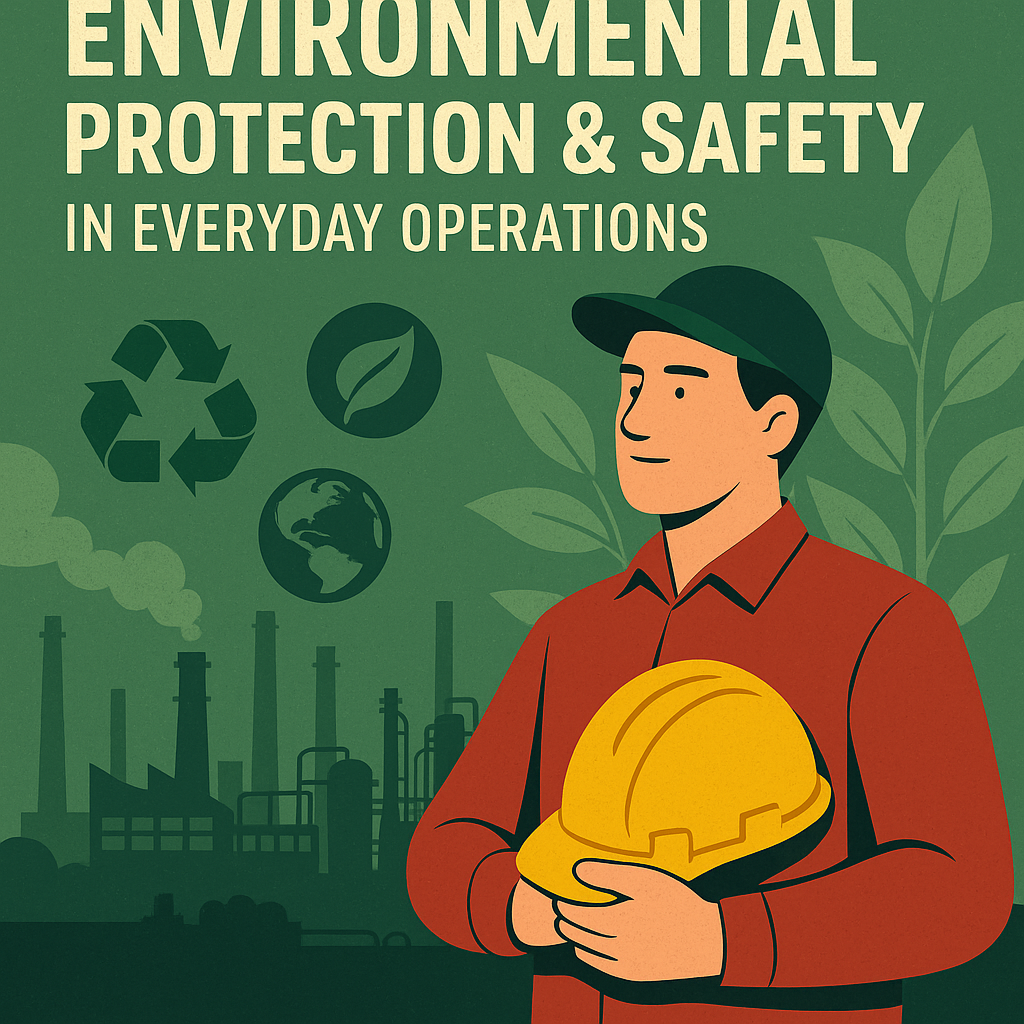
Environmental Protection & Safety in Everyday Operations: 20 Smart Practices for a Greener Workplace

Introduction to Environmental Protection and Safety

Environmental protection and safety in everyday operations are no longer optional—they’re essential. Whether in manufacturing, logistics, retail, or office-based environments, safeguarding both people and the planet must go hand in hand. Companies today are expected not only to comply with regulations but also to lead with purpose. Balancing occupational safety with environmental responsibility promotes not just sustainability—but also operational efficiency and corporate reputation.

The Link Between Safety and Environmental Sustainability

Many organizations treat safety and sustainability as separate silos. But in reality, they are deeply intertwined. For instance, reducing emissions through cleaner equipment enhances air quality for workers. Proper waste management doesn’t just protect the environment—it also prevents workplace hazards. Sustainable practices help reduce fire, chemical, and respiratory risks.

Examples include:

  • Switching to low-VOC paints improves both indoor air quality and environmental impact.

  • Installing LED lighting saves energy and reduces heat, making work areas safer.


Identifying Everyday Operational Hazards

You can’t manage what you don’t know. Identifying risks in your daily operations is the first step toward control. These fall into several categories:

  • Chemical Hazards: Solvents, fuels, industrial cleaners

  • Physical Hazards: Noise, vibration, extreme temperatures

  • Biological Hazards: Molds, bacteria, waste by-products

  • Ergonomic Hazards: Poor workstation setup, repetitive tasks

Each of these can have a dual impact—on employee health and environmental well-being.


Workplace Safety Essentials

A safety-first culture starts with the basics:

  • PPE (Personal Protective Equipment): Gloves, masks, safety glasses

  • Emergency Response Plans: Fire drills, chemical spill procedures

  • First Aid Kits & AEDs: Easily accessible and regularly stocked

Implementing routine safety drills, toolbox talks, and daily checklists can reduce incident rates by up to 60%.


Environmental Risk Management Strategies

A robust environmental safety strategy involves:

  • Conducting Environmental Impact Assessments (EIA)

  • Monitoring Emissions and Pollutants

  • Creating Environmental Incident Logs

  • Setting Reduction Targets for Energy and Waste

Companies can use frameworks like ISO 14001 to manage environmental systems effectively.

Implementing Sustainable Practices

Simple changes can have massive impacts:

Practice Benefit
LED lighting Reduces power consumption
Water-saving taps Lowers water waste
Electronic documentation Minimizes paper usage
Carpool incentives Cuts carbon footprint

Every department—procurement, HR, production—should have sustainability KPIs built into operations.


Essential Products for Environmental Protection

To maintain environmental integrity:

  • Biodegradable Cleaners – Less toxic, safer for all

  • Spill Kits – For oil, chemicals, and hazardous waste

  • Green Seal or EPA Safer Choice Products – Certified safe

  • Recycled Office Supplies – Reduce landfill load

Using low-impact consumables is one of the most affordable ways to go green.


Safety Equipment for Everyday Operations

Keep these in your operational checklist:

  • Fire extinguishers (ABC-rated)

  • Eye wash stations

  • Safety showers

  • Exhaust ventilation systems

  • Emergency signage

Make sure equipment is inspected monthly and fully functional.


Role of Safety Signage and Labeling

Clear labeling and signs save lives.

  • GHS-compliant hazard symbols

  • Color-coded waste bins

  • Exit route diagrams

  • Warning and caution signage for machinery

Effective visual communication reduces errors and improves regulatory compliance.


Waste Management Best Practices

Responsible waste handling involves:

  1. Source Segregation

  2. Proper Labeling

  3. Hazardous Waste Disposal Contracts

  4. Employee Waste Handling Training

Digitized waste tracking also helps with environmental audits.


Air and Water Quality Control Solutions

Invest in:

  • HEPA filtration systems

  • Dust and fume extractors

  • Stormwater filtration units

  • Grease trap maintenance

Clean air and water benefit both employees and surrounding communities.


Regulatory Compliance and Standards

Keep up with:

  • OSHA for workplace safety

  • EPA for environmental regulation

  • ISO 14001 for environmental systems

  • ISO 45001 for occupational health & safety

Non-compliance can lead to heavy fines and reputation damage.


Staff Training and Engagement Programs

Ongoing education = continuous improvement.

  • New hire orientation

  • Quarterly environmental workshops

  • Gamified safety challenges

  • Employee feedback systems

Involving employees fosters ownership and innovation.


Technology for Environmental Safety Monitoring

Smart solutions include:

  • IoT sensors for leak detection

  • AI-based safety analytics

  • Carbon tracking dashboards

  • Compliance management software

These tools automate risk detection and help with real-time reporting.


Case Studies of Companies Doing it Right

  • Patagonia: Combines product sustainability with ethical labor practices

  • Toyota: Zero-landfill factories and safety-first production

  • Unilever: Integrated safety and environmental standards across global ops

They show it’s not only possible—it’s profitable.


Challenges in Environmental and Operational Safety

Expect hurdles such as:

  • Budget limitations

  • Lack of awareness

  • Resistance to change

  • Data management overload

Tackle these with leadership buy-in and phased implementation.


Future Trends in Environmental Protection & Safety

Keep an eye on:

  • Smart PPE that monitors fatigue

  • AI-based compliance alerts

  • Blockchain for waste traceability

  • Circular economy models in operations

The future blends innovation, safety, and sustainability seamlessly.


FAQs on Environmental Protection & Safety in Everyday Operations

Q1: Why is environmental protection important in everyday business?
A: It reduces ecological harm, improves safety, boosts brand reputation, and ensures legal compliance.

Q2: What are examples of sustainable safety equipment?
A: Solar-powered emergency lighting, biodegradable spill kits, and energy-efficient HVAC systems.

Q3: How can small businesses implement environmental safety affordably?
A: Start with LED lights, recycling bins, and basic staff training. These have low cost but high impact.

Q4: Which industries need the most environmental safety measures?
A: Manufacturing, construction, healthcare, and logistics.

Q5: What certifications help businesses prove their environmental efforts?
A: ISO 14001, LEED Certification, and EPA Safer Choice.

Q6: How often should risk assessments be done?
A: At least annually—or when new operations, products, or risks are introduced.


Conclusion: A Safer, Greener Way Forward

Integrating environmental protection & safety in everyday operations isn’t a checkbox—it’s a continuous journey. With the right mix of tools, training, and technology, businesses can create safer workplaces and a healthier planet. Start small, stay consistent, and evolve constantly.

Explore More: