
How to Identify Storage Capacity Issues Before They Impact Productivity, Safety, and Growth
Warehouse space is one of the most valuable resources in any manufacturing, distribution, logistics, or industrial operation. As businesses grow, inventory levels increase, product lines expand, and operational demands change. Unfortunately, many companies continue operating with storage systems that were designed years ago for a much smaller operation.
The result is often reduced productivity, safety concerns, inefficient workflows, and rising operating costs.
If your facility feels crowded or employees are constantly searching for storage space, it may be time to evaluate whether your warehouse has outgrown its current storage system.
Here are the most common warning signs.
Warehouse Storage Capacity Planning Guide
Businesses searching for warehouse storage solutions often want to identify signs that their facility has outgrown its storage system. Common indicators include floor-stacked inventory, congested aisles, increasing product damage, inventory organization challenges, forklift traffic bottlenecks, and limited storage capacity. Modern warehouse storage solutions include pallet racking systems, industrial shelving, mezzanines, storage bins, material handling equipment, and warehouse layout optimization. Improving warehouse storage capacity helps manufacturers, distribution centers, logistics providers, and industrial facilities increase efficiency, improve safety, reduce operating costs, and support long-term growth without requiring expensive building expansions.
Buckeye Industrial provides pallet racking, industrial shelving, mezzanines, warehouse storage systems, material handling equipment, lockers, workstations, storage bins, and warehouse design services for manufacturers, warehouses, and distribution centers throughout Ohio and the Midwest.
1. Pallets Are Being Stored on the Floor
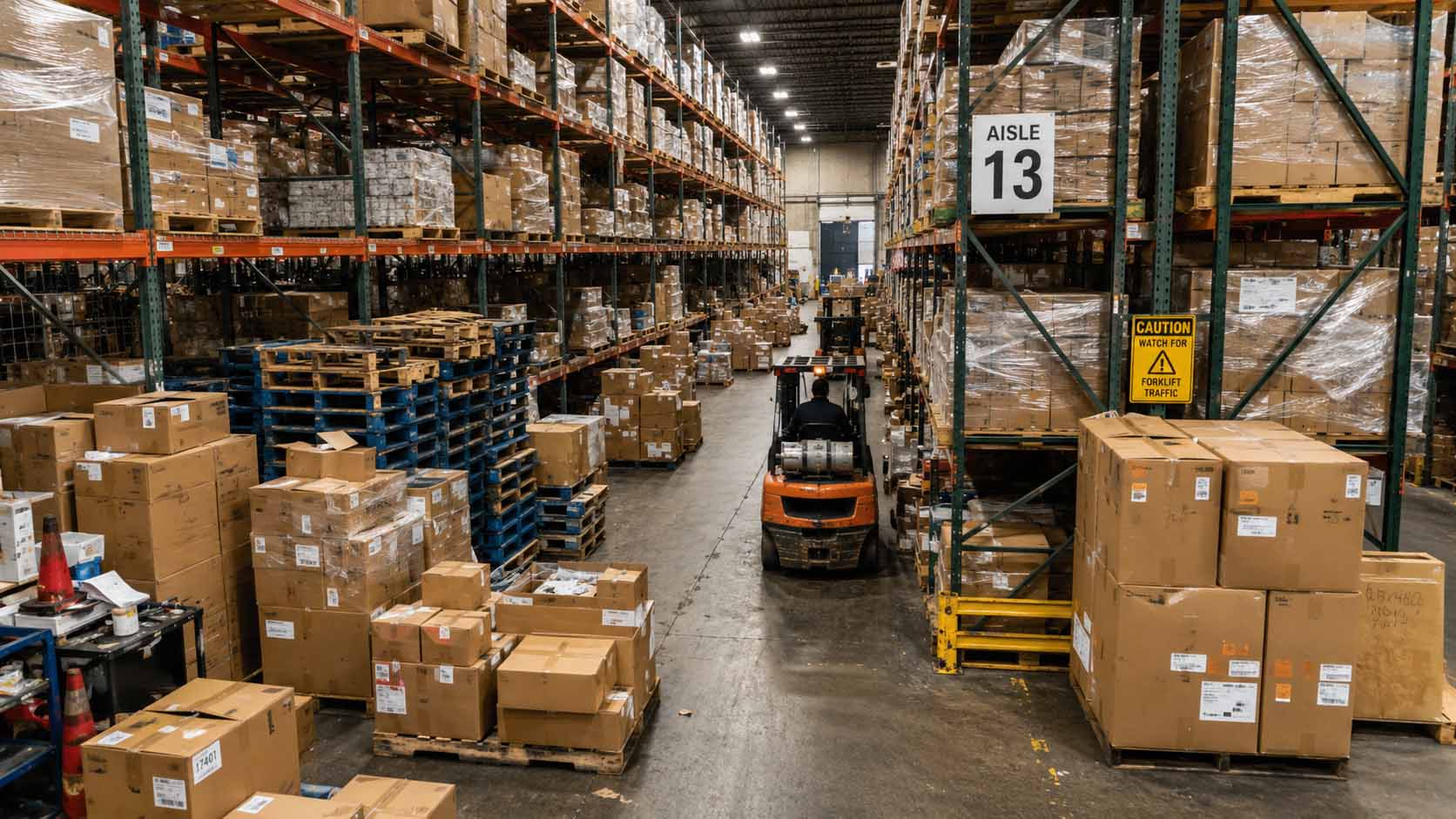
One of the clearest indicators of insufficient storage capacity is floor-stacked inventory.
When pallet positions become unavailable, employees often begin storing products in aisles, staging areas, receiving docks, or open floor space.
This creates several problems:
- Reduced forklift access
- Increased product damage
- Safety hazards
- Blocked emergency routes
- Lower operational efficiency
Floor storage is often a temporary solution that becomes a permanent problem.
If pallets are consistently being stored outside designated racking systems, your warehouse may need additional pallet racking or a redesigned layout.
2. Aisles Are Becoming Congested
Warehouse traffic should flow efficiently throughout the facility.
When storage systems become overloaded, aisles often become crowded with:
- Excess inventory
- Temporary storage locations
- Staging pallets
- Equipment
Congested aisles can:
- Slow forklift operations
- Increase accident risks
- Reduce productivity
- Create bottlenecks
A properly designed warehouse should allow smooth movement throughout the facility without constant obstacles.
3. Employees Spend Too Much Time Looking for Inventory
As storage systems become strained, organization often suffers.
Signs include:
- Misplaced inventory
- Frequent inventory searches
- Picking errors
- Delayed shipments
- Overstocked storage areas
If employees regularly spend time locating products rather than moving them, the issue may not be inventory management alone—it could be a storage capacity problem.
Well-designed pallet racking, shelving systems, and storage layouts improve visibility and accessibility.
4. Inventory Levels Continue Growing
Business growth is a good problem to have—unless your warehouse cannot support it.
Many facilities were designed around inventory requirements from years ago.
Ask yourself:
- Has inventory increased significantly?
- Have new product lines been added?
- Are more SKUs being stored?
- Has customer demand increased?
If inventory growth has outpaced storage growth, efficiency and safety often begin to suffer.
Storage systems should support future growth, not just current operations.
5. Forklift Traffic Is Difficult to Manage
Forklift operators often recognize storage limitations before management does.
Warning signs include:
- Tight turning areas
- Frequent traffic congestion
- Delays accessing inventory
- Increased risk of rack damage
- Limited maneuvering space
When forklift operations become difficult, warehouse productivity declines and accident risks increase.
An updated storage system can improve traffic flow while maximizing storage density.
6. Product Damage Is Increasing
As warehouses run out of space, inventory is often stored in less-than-ideal locations.
This can lead to:
- Crushed cartons
- Damaged pallets
- Forklift impacts
- Inventory loss
- Customer complaints
Product damage not only increases costs but can also affect customer satisfaction and profitability.
Storage systems should protect inventory while maintaining accessibility.
7. You’re Running Out of Vertical Storage Space
Many warehouses expand outward long before fully utilizing available vertical space.
Look up.
If your facility has substantial unused ceiling height, there may be opportunities to:
- Add additional beam levels
- Install taller pallet racking
- Increase storage density
- Improve space utilization
Utilizing vertical space is often far less expensive than expanding warehouse square footage.
8. Safety Concerns Are Becoming More Common
Overcrowded warehouses typically experience more safety issues.
Common warning signs include:
- Near misses involving forklifts
- Blocked walkways
- Obstructed fire equipment
- Rack impacts
- Improper inventory stacking
Warehouse safety should never be sacrificed to gain additional storage.
A properly designed storage system improves both efficiency and workplace safety.
9. New Equipment Has No Room to Operate
As operations grow, facilities often add:
- Additional forklifts
- Order pickers
- Material handling equipment
- Packing stations
- Workstations
If new equipment creates congestion or disrupts workflow, your warehouse layout may no longer support your operational needs.
Storage systems should evolve alongside your business.
10. Expansion Conversations Are Becoming Frequent
If management regularly discusses:
- Warehouse expansion
- Leasing additional space
- Facility relocation
- Off-site storage
there is a strong possibility your storage system is no longer meeting your needs.
Before investing in new buildings or additional warehouse space, many companies discover they can significantly increase capacity through improved pallet racking systems, shelving solutions, mezzanines, and warehouse layout optimization.
Solutions for Growing Warehouses
Outgrowing a storage system does not always mean you need a larger building.
Potential solutions include:
Pallet Racking Upgrades
Modern racking systems can dramatically increase storage capacity.
Industrial Shelving
Improve organization for smaller inventory and maintenance items.
Warehouse Mezzanines
Add valuable storage or workspace without expanding the building footprint.
Storage Bins and Containers
Improve inventory organization and accessibility.
Warehouse Layout Redesign
Optimize traffic flow, storage density, and operational efficiency.
Material Handling Equipment Improvements
Increase productivity while reducing bottlenecks.
Don’t Wait Until Storage Problems Affect Customers
Many warehouse storage issues develop gradually over time.
What starts as a few pallets on the floor can eventually become:
- Shipping delays
- Inventory errors
- Safety concerns
- Product damage
- Reduced profitability
Recognizing the warning signs early allows businesses to make proactive improvements before problems impact operations.
Professional Warehouse Storage Solutions
At Buckeye Industrial, we help manufacturers, distribution centers, warehouses, and industrial facilities maximize storage capacity through pallet racking systems, industrial shelving, mezzanines, material handling equipment, storage bins, and warehouse design services.
Whether your facility is experiencing growing inventory levels, overcrowded aisles, or inefficient storage layouts, our team can help identify opportunities to improve efficiency, increase storage capacity, and support future growth.
Frequently Asked Questions
How do I know if my warehouse is running out of storage space?
Common signs include pallets stored on the floor, congested aisles, inventory organization issues, product damage, and limited room for expansion.
Can pallet racking increase warehouse capacity?
Yes. Properly designed pallet racking systems often increase storage density while improving inventory accessibility and organization.
Is it cheaper to expand a warehouse or optimize storage?
In many cases, optimizing existing storage systems is significantly more cost-effective than expanding or relocating a facility.
What are the benefits of warehouse mezzanines?
Mezzanines utilize unused vertical space and can provide additional storage, production, or office space without expanding the building footprint.
When should a warehouse redesign its storage system?
Warehouses should evaluate storage systems whenever inventory growth, operational changes, or space limitations begin impacting productivity or safety.
Related Articles & Resources
Learn more about warehouse safety, material handling, preventive maintenance, and industrial facility solutions from Buckeye Industrial.
- Pallet Racking Safety: The Hidden Dangers That Can Cost Lives, Millions, and Your Business
- Warehouse Safety Products That Save Lives and Equipment
- Preventive Maintenance for Warehouses
- Material Handling Services
- Material Handling Products
- Preventive Maintenance Program
- Material Handling Installation FAQ
- Project Gallery
- Material Handling Industry News
- Request a Quote
Buckeye Industrial provides material handling equipment, warehouse safety products, pallet racking services, preventive maintenance programs, conveyor support, inspections, and installation services throughout Ohio and the Midwest.