
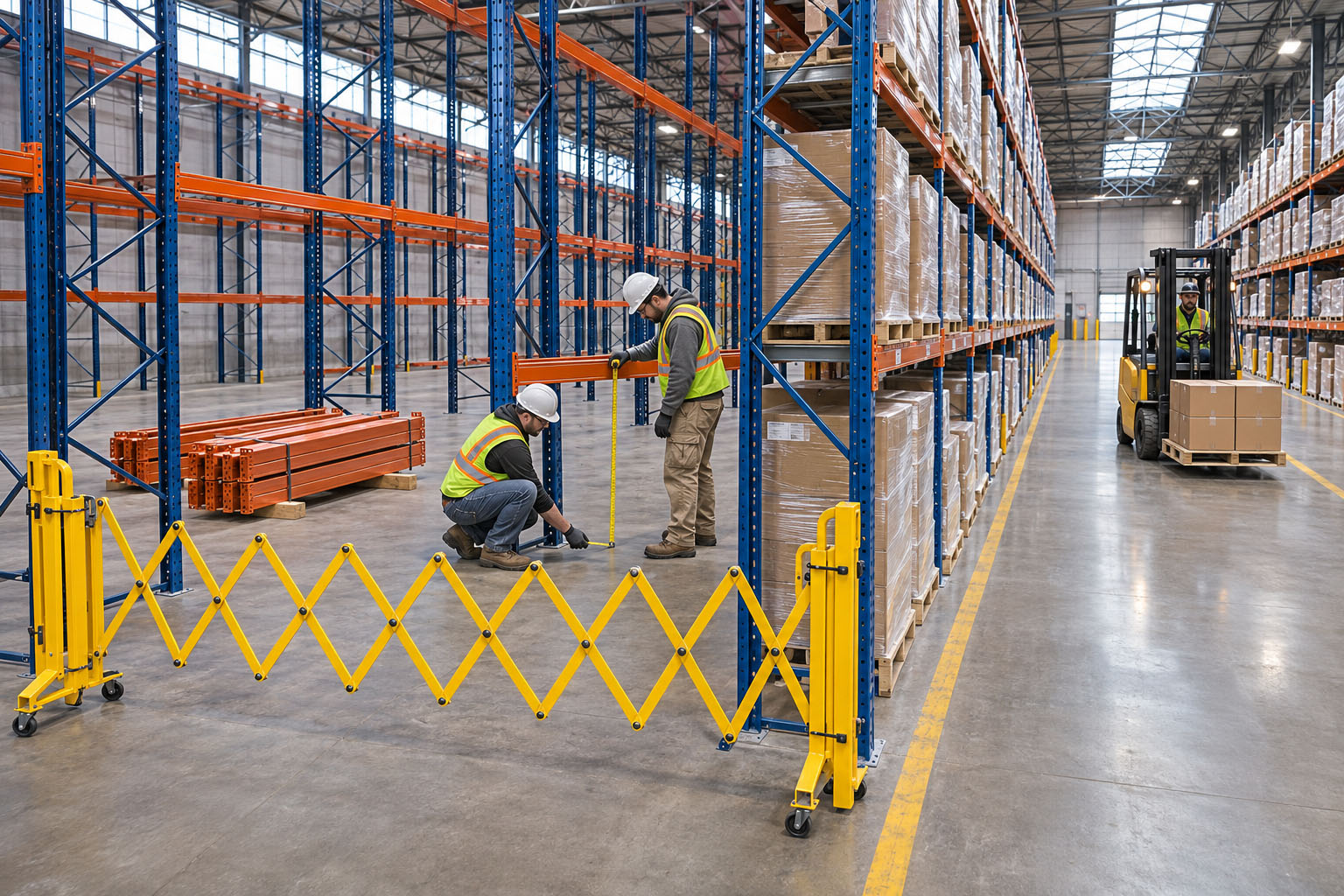
Yes, many warehouses can reconfigure pallet racking while receiving, picking, and shipping continue in other parts of the building. A phased project works when the facility can empty and isolate the affected rack, give installers enough room to work, and provide a separate route for employees and lift trucks. If the work area cuts across the only route to shipping, a planned interruption may be necessary. Finding that conflict on a floor plan is a lot easier than discovering it with a truck waiting at the dock.
Before anyone books a crew, have your warehouse manager answer one question: Where will the first aisle’s pallets go, and how will the next shift find them? That answer helps determine how much rack you can release at once and whether the work belongs on a weekday, overnight, or over a weekend.
Start with the inventory that still needs to ship
Suppose a distributor wants to change its beam elevations because incoming pallets are taller than the loads the warehouse handled five years ago. The project covers 12 bays. Four hold reserve stock that rarely moves during the day. The next four replenish the fastest pick locations in the building. The last four sit beside the cross aisle serving the outbound docks. Those bays look identical on the rack drawing, but closing each group has a different effect on the business.
Walk the proposed layout with someone who runs the busiest shift. Mark the first outbound pickup, the receiving doors that must stay accessible, and the products pickers will need during the closure. Look for inventory that can ship before work begins. Every pallet that leaves on its normal order is one less pallet your team has to move twice.
Example: How a 12-bay rack reconfiguration could work
This example assumes the installer and the facility’s safety lead have identified work zones that can be isolated independently. Adjacent bays can share upright frames, so the boundary may extend beyond the bays being changed. Confirm which neighboring positions must be unloaded or closed before moving inventory into them.
- Bays 1–4: Start with reserve inventory. Suppose each bay currently holds six pallets. That gives you 24 pallets to relocate before the crew arrives. Inventory control assigns and labels 24 suitable temporary positions, then records each move. If only 16 positions are available, reduce the first phase or arrange more storage before committing to the schedule.
- Bays 5–8: Protect the next shipping shift. These bays feed the fast-pick area. Before closing them, check open orders and replenish the active pick locations for the agreed work window. Give the shift lead a backup replenishment location in case demand runs ahead of the forecast. Release these bays only after the previous section has been inspected and cleared for its intended use.
- Bays 9–12: Schedule around the dock. Walk the alternate forklift route while the dock is operating. Can a driver carrying the usual load make the turn without entering the work zone or blocking a pedestrian route? If that route will not work during outbound loading, schedule this phase after the final pickup. The first eight bays may be practical on weekdays even when the last four need a weekend window.
When calculating available space, count positions that can actually hold the displaced pallets. An empty slot that cannot accommodate the load’s height or weight does not help the move. Buckeye Industrial’s guide to calculating how much pallet racking a warehouse needs explains how pallet dimensions, inventory levels, and turnover affect that count.
Can you change beam heights on existing pallet rack?
Moving a beam changes the spacing between levels and can affect the capacity of the upright frame. Before scheduling the change, find the original load application and rack configuration drawings, often called LARC drawings. They may already show an approved arrangement that fits your new pallet heights.
If the proposed arrangement is outside the approved drawings, the Rack Manufacturers Institute advises consulting the original rack manufacturer or the engineer of record before changing the structure. Give them the proposed beam elevations and the heaviest pallet the system will carry. Include this review in the project schedule so the crew has an approved layout when the aisle becomes available. Read the Rack Manufacturers Institute’s guidance on reconfiguring pallet rack.
When is weekend rack installation worth the extra cost?
Weekend work is worth pricing when a closure would interfere with a time-sensitive part of the operation. An aisle that serves parcel orders until the evening carrier cutoff may be expensive to release for two hours on a Tuesday. A reserve row at the back of the same building may be available for an entire weekday shift.
Ask for weekday and off-shift options against the same drawing. Include the cost of your own forklift operators, supervision, and inventory moves. Check who can inspect the finished work and authorize reopening. A crew can finish on Sunday afternoon and still leave Monday’s pickers waiting if the person responsible for releasing the aisle is unavailable.
What needs to happen before the aisle reopens?
- Verify the finished rack. Have the completed configuration inspected against the approved layout. Resolve damaged components or incomplete work and confirm the posted load information matches the configuration before reloading.
- Walk the travel routes. Remove unused materials and check the working clearances at aisle ends, turns, and dock approaches. OSHA requires adequate clearance for mechanical handling equipment and clear aisles and passageways. See OSHA’s material handling requirements.
- Test a pick location. Scan a new location label and verify that the warehouse management system directs the picker to the correct bay and level. If your facility uses printed pick sheets, check one against the physical row.
- Hand the area back to operations. Name the person who can release each section. Tell receiving, replenishment, and shipping which locations are open and which barriers must remain in place for the next phase.
What to send for a pallet rack reconfiguration quote
Start with a marked-up layout, a few photos down the affected aisles, the number of bays, and the changes you want to make. Include any available rack drawings, current and proposed beam heights, pallet dimensions and weights, operating hours, and carrier cutoffs. Identify who will move inventory and what lift equipment your facility can make available. Those details let an installer price a schedule your operations team can actually support.
If the layout problem extends beyond the rack itself, read Signs Your Warehouse Has Outgrown Its Storage System. If you already know the project calls for additional rack, decking, or aisle protection, review Buckeye Industrial’s warehouse equipment and material handling products.
Buckeye Industrial considers select pallet rack installation and reconfiguration projects in most U.S. states. Send your facility location, proposed layout, and the hours you can release each aisle. If one area must stay open through the last truck of the day, mark it on the drawing so we can account for it in the quote. Request a pallet rack reconfiguration quote.