
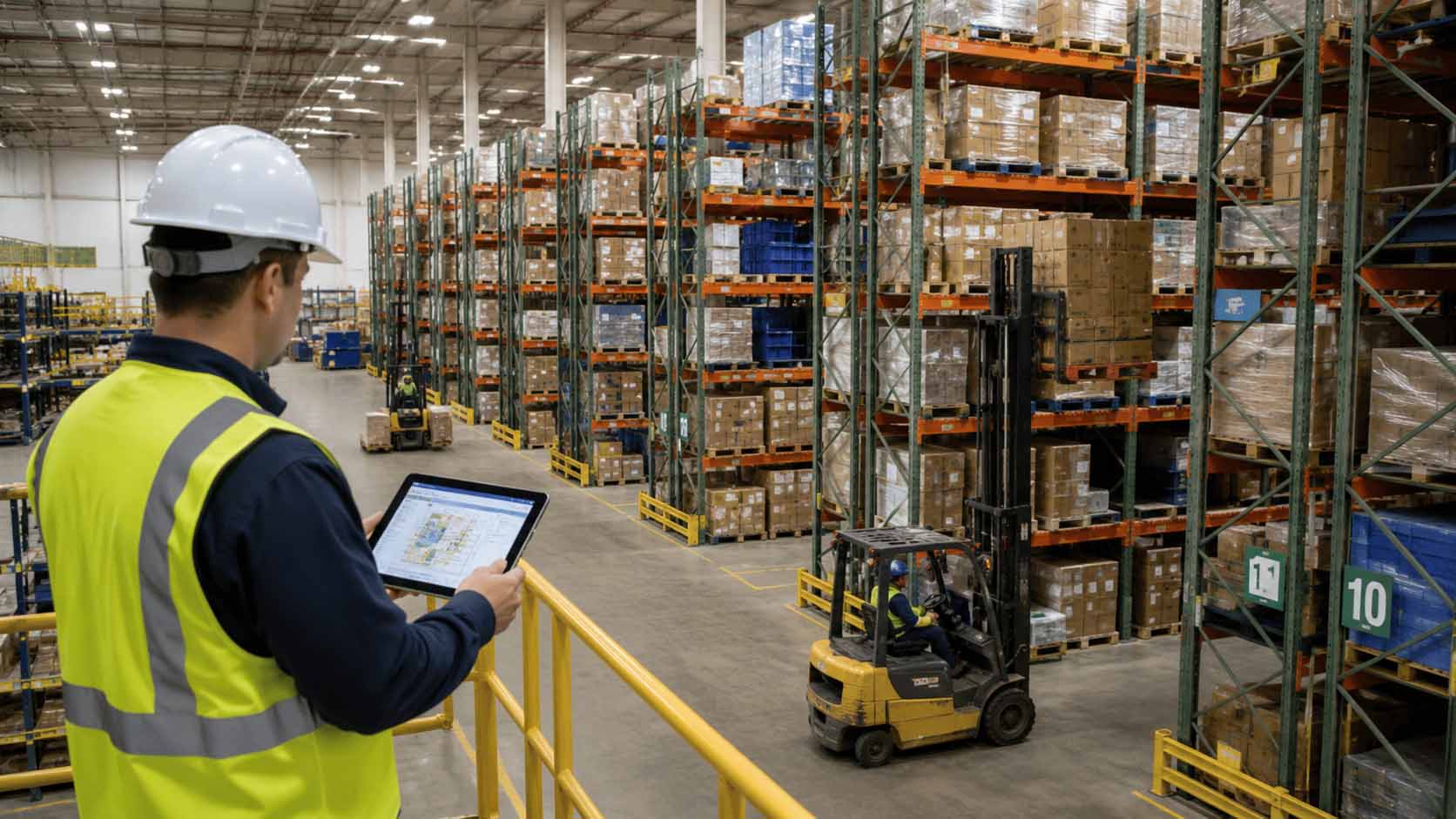
An Industrial Storage Planning Guide for Warehouses, Distribution Centers, and Manufacturing Facilities
Warehouse space is one of the most valuable assets a company owns. Whether you’re managing a manufacturing plant, distribution center, fulfillment operation, or industrial storage facility, maximizing storage capacity without sacrificing efficiency is critical to controlling costs and supporting growth.
One of the most common questions facility managers ask is:
“How much pallet racking does my warehouse actually need?”
The answer depends on inventory levels, product dimensions, warehouse layout, future growth plans, and operational requirements. Installing too little racking creates congestion and limits expansion, while installing too much can waste valuable floor space and capital.
This guide will help you determine how much pallet racking your facility needs and how to avoid common warehouse storage mistakes.
Warehouse Pallet Racking Planning Guide
Businesses searching for pallet racking solutions often want to know how many pallet positions their warehouse requires, how to maximize storage capacity, and which pallet racking system is best for their operation. Proper warehouse storage planning considers inventory levels, pallet dimensions, forklift traffic, warehouse layout, ceiling height, future growth projections, and operational efficiency. Pallet racking systems help manufacturers, distribution centers, warehouses, and logistics facilities increase storage density, improve inventory organization, reduce product damage, and support long-term expansion. Common warehouse storage solutions include selective pallet racking, push-back racking, drive-in racking, cantilever racking, industrial shelving systems, mezzanines, and material handling equipment. Organizations that optimize warehouse storage capacity often improve productivity while delaying costly facility expansions.
Buckeye Industrial provides pallet racking systems, industrial shelving, warehouse storage solutions, material handling equipment, warehouse safety products, mezzanines, lockers, workstations, storage bins, and warehouse design services for manufacturers, distribution centers, and industrial facilities throughout Ohio and the Midwest.
Why Proper Pallet Racking Matters
A well-designed pallet racking system does more than simply store products.
Proper warehouse racking can:
- Increase storage capacity
- Improve inventory organization
- Enhance worker safety
- Improve forklift traffic flow
- Reduce product damage
- Increase picking efficiency
- Support future growth
Companies often discover they can increase storage capacity significantly without expanding their facility simply by optimizing their racking layout.
Start With Your Current Inventory
Before selecting a pallet racking system, you must understand what you’re storing.
Questions to consider:
- How many pallets are currently stored?
- What are the pallet dimensions?
- What is the average pallet weight?
- How often does inventory turn over?
- Are products stored long-term or short-term?
- Do you anticipate future inventory growth?
Many facilities underestimate future inventory needs and quickly outgrow their storage systems.
A good rule is to design for both current inventory requirements and projected growth over the next three to five years.
Calculate Required Pallet Positions
The first step in determining racking needs is calculating the number of pallet positions required.
For example:
- Current inventory = 800 pallets
- Seasonal inventory increase = 15%
- Growth projection = 20%
800 pallets × 1.35 = 1,080 pallet positions
In this scenario, designing for approximately 1,100 pallet positions would provide room for growth while preventing immediate expansion costs.
Consider Your Inventory Turnover Rate
Not all warehouses require the same racking configuration.
High-Turnover Inventory
Facilities with rapid inventory movement often benefit from:
- Selective pallet racking
- Wide aisles
- Easy product access
- Fast picking operations
Examples include:
- Distribution centers
- E-commerce fulfillment operations
- Retail product storage
Low-Turnover Inventory
Facilities storing inventory for longer periods may benefit from:
- Drive-in racking
- Push-back racking
- Higher-density storage systems
Examples include:
- Manufacturing facilities
- Seasonal inventory storage
- Bulk material warehouses
The right racking system depends on how inventory moves through your operation.
Maximize Vertical Storage Space
One of the most overlooked opportunities in warehouse storage is vertical space.
Many facilities use only a fraction of their available building height.
Instead of expanding warehouse square footage, companies can often add:
- Additional beam levels
- Taller racking systems
- Narrow aisle configurations
- High-density storage systems
Utilizing vertical space can significantly increase storage capacity while minimizing facility expansion costs.
Account for Forklift Operations
Storage density should never compromise safety or efficiency.
When planning pallet racking, consider:
- Forklift turning radius
- Aisle widths
- Traffic flow
- Loading and unloading zones
- Employee access routes
Poor racking layouts often create bottlenecks that reduce productivity and increase accident risks.
An optimized warehouse layout balances storage density with operational efficiency.
Common Signs You Need More Pallet Racking
Many facilities wait too long before upgrading storage systems.
Warning signs include:
- Pallets stored on the floor
- Congested aisles
- Limited forklift access
- Frequent inventory movement to create space
- Safety concerns
- Increasing product damage
- Reduced picking efficiency
If your team regularly struggles to find storage space, it may be time to reevaluate your warehouse layout and racking capacity.
Choosing the Right Type of Pallet Racking
Several racking systems are available depending on your storage requirements.
Selective Pallet Racking
Best for:
- Fast-moving inventory
- High SKU counts
- Easy product access
Push-Back Racking
Best for:
- Higher-density storage
- Moderate inventory turnover
Drive-In Racking
Best for:
- Large quantities of similar products
- Maximum storage density
Cantilever Racking
Best for:
- Lumber
- Pipe
- Structural steel
- Long materials
Selecting the proper system can dramatically improve storage efficiency while reducing operating costs.
Don’t Forget Future Growth
One of the most expensive warehouse mistakes is designing a storage system only for today’s inventory.
Growth should always be considered during warehouse planning.
Questions to ask:
- Will inventory levels increase?
- Are new product lines being added?
- Will additional warehouse automation be implemented?
- Are facility expansions planned?
Building flexibility into your racking system can save significant costs later.
Professional Warehouse Storage Planning
Determining the right amount of pallet racking requires more than counting pallets. A properly designed storage system considers inventory levels, facility dimensions, forklift operations, safety requirements, and future growth objectives.
At Buckeye Industrial, we help warehouses, manufacturers, and distribution centers design storage solutions that maximize available space while improving efficiency and safety. From pallet racking and industrial shelving to complete warehouse storage planning, our team works with customers throughout Ohio and beyond to develop solutions tailored to their operations.
Frequently Asked Questions
How do I know if my warehouse needs more pallet racking?
If pallets are being stored on the floor, aisles are congested, or employees regularly struggle to find storage space, your facility may benefit from additional racking.
How much pallet racking should I plan for?
Most facilities should plan for current inventory needs plus projected growth over the next three to five years.
What is the most common type of pallet racking?
Selective pallet racking is the most widely used system because it provides direct access to every pallet position.
Can pallet racking increase warehouse capacity without expansion?
Yes. Many facilities can significantly increase storage capacity by utilizing vertical space and optimizing warehouse layout.
What type of pallet racking is best for manufacturing facilities?
The best system depends on inventory turnover, product dimensions, and operational requirements. Selective, push-back, and drive-in systems are common choices.
Companies searching for pallet racking solutions often want to know how many pallet positions they need, how to maximize warehouse storage capacity, and which racking system is best for their operation. Proper warehouse storage planning considers inventory levels, pallet dimensions, forklift traffic, facility height, and future growth projections. Businesses that optimize pallet racking layouts can improve efficiency, increase storage density, enhance safety, and delay costly warehouse expansions.
Related Resources
- Warehouse Storage Solutions
- Industrial Shelving Systems
- Material Handling Equipment
- Warehouse Safety Solutions
- Warehouse Layout & Design Services
- Pallet Rack Inspections
- Warehouse Expansion Planning
- Industrial Storage Bins & Containers
- Mezzanine Systems
- Warehouse Relocation Services
Need help planning your warehouse storage system? Contact Buckeye Industrial to discuss pallet racking, shelving, and material handling solutions designed to maximize your facility’s efficiency and growth potential.
Related Articles
Continue exploring warehouse storage, pallet racking, safety, and material handling solutions with these helpful resources from Buckeye Industrial:
- How Much Pallet Racking Does a Warehouse Really Need?
- Signs Your Warehouse Has Outgrown Its Storage System
- Pallet Racking Safety: The Hidden Dangers That Can Cost Lives, Millions, and Your Business
- Warehouse Safety Products That Save Lives and Equipment
- Preventive Maintenance for Warehouses: Why Quarterly Service Contracts Pay Off
- Material Handling Industry News & Resources
- Material Handling Services
- Material Handling Products
- Preventive Maintenance Programs
- Request a Warehouse Storage Consultation